Pre-Seeded Test Data Strategies for API Simulators
Design your simulator's seed data to expose real workflows and edge cases.
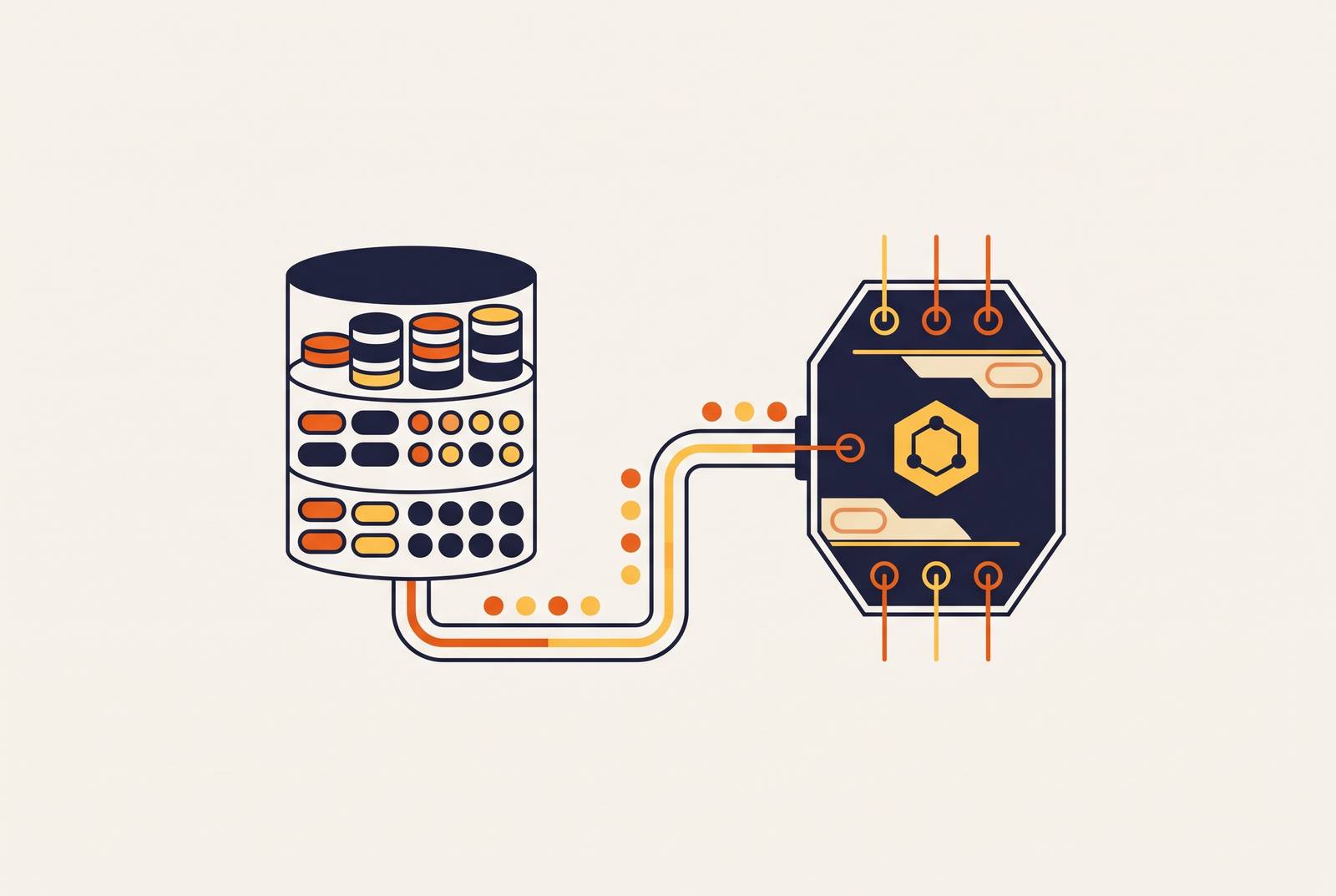
Integration testing against stateful APIs requires a simulator that remembers prior calls and starts from a controlled, relationally coherent dataset. To test without hitting production, that dataset must cover the workflows, boundaries, and failures the application will face. Pre-seeded test data strategies shape what a passing suite proves: that the application behaves correctly across a sequence of operations, or that responses look right on their own.
Why the test data you seed determines what your simulator can actually prove
A team can pass every test with a sparse seed, then run into an unexpected state collision in production. A webhook might work for a new customer but disappear for a customer whose account predates the webhook subscription. The seed had no record of that older customer’s state. With one user, one record, and one successful outcome, the suite cannot expose interactions that depend on accumulated history.
That limitation separates stateless mocks from stateful simulators. Stateless mocks return the same response each time, while stateful simulators remember earlier calls, making the starting state part of every later assertion. Engineers therefore own both the world in which the simulator operates and the assertions against it. API7.ai’s mocking guide says behavioral mocks are a good fit for performance and resilience testing. Engineers still have to design a good seed, even when they use that kind of mock.
What "shape" means for seed data and why it is the first design decision
Shape is the relational topology of seed data, including the entity types present, their instances, and the references connecting them. It determines which workflows the simulated world can express. A flat list of users supports retrieval assertions. Without associated orders, payments, or events, however, it cannot support a workflow that crosses those boundaries.
In a deeper shape, users have orders, orders have line items and payments, and payments have refunds. Those relationships give tests a foundation for creating an order, paying for it, and checking the state after a refund. The first design decision is therefore which relationships must exist, before deciding how many records to populate. Relational integrity constrains every reference in that structure. An order pointing to a nonexistent customer can produce a 404 or a silent null-pointer failure that misleadingly implicates application code.
How much data is enough — volume, variety, and the boundary between too little and too much
The useful seed is the smallest dataset that forces the application to handle realistic distributions. Lists must have enough results to cross the API’s pagination threshold, filters need attribute values that differ, and sorting needs records that show the order in both directions. One record cannot exercise those differences. Search endpoints likewise need sets of matches to rank.
More records are not automatically more useful. Excess volume slows simulator startup, obscures which record caused a failure, and expands the work required when schemas change. Variety provides a separate kind of coverage. For a Stripe charges seed, successful and declined charges, a refund in progress, and a disputed transaction test paths that more successful charges alone cannot reach. The target is coverage of the relevant distribution, with volume capped once pagination, filtering, and ordering have sufficient data.
Edge cases belong in the seed, not in one-off test fixtures
Edge cases should stay in the seed as immutable records, rather than come and go as records hidden inside each test’s setup blocks. Central records are reusable, reviewable, and available to later tests. Mutable working state belongs in a separate category, created by tests and removed afterward, so that tests do not alter the shared edge cases they depend on.
Boundary records can include an order with zero line items, a string at the maximum documented length, and a timestamp at epoch zero. Status extremes include suspended users, past-due subscriptions, and webhooks that have exhausted their allowed retries. Relational exceptions need equal care. A payment method without a customer belongs in the seed only if the API permits it, while locale coverage can include JPY amounts, non-ASCII addresses, and international phone numbers. When these records stay unchanged, later tests can use them even if teardown is not perfectly reliable.
Fault states are data too — seeding the conditions that let you inject failures
Resilience tests need entities whose state shows why a failure happens. A rate-limited API key should already be at quota, an account requiring manual review should be flagged accordingly, and a failing webhook endpoint should support a retry-queue scenario. Identity is part of the failure condition. An indiscriminate 429 can show that a retry handler runs without showing that it handles the correct resource under the correct identity.
For every failure mode the application must handle, the seed should have an entity whose current state causes that failure. Payment examples include a card that declines, a card that triggers 3D Secure, and a charge with an open dispute. Messaging examples include a channel from which the bot has been removed and a user whose DMs are restricted. These are data-design decisions made before tests, while the mechanics for activating failures remain specific to the simulator.
Where seed data comes from — production snapshots, synthetic generation, and recorded traffic
Anonymized production snapshots preserve real field distributions, relationships, and organically occurring edge cases. Before storage or commitment, snapshots require PII substitution, token rotation, and credential scrubbing. They also drift as the production schema changes, making them better starting material for a seed library than its permanent living form.
Synthetic generation offers controlled distributions without production PII. It can make version-controlled records, but it tends to use typical values unless the team designs long-tail cases into it. Recorded live traffic serves a different purpose. It records real request and response shapes, though the payloads need scrubbing and still reflect the API behavior recorded that day. The practical combination is a synthetic base, anonymized production samples for difficult relational patterns, and recorded traffic to validate that generated structures resemble real responses.
How a pre-seeded cohesive world differs from a collection of independent fixtures
Independent fixtures give each test only the records it needs, often with no links to records that other tests use. A cohesive seed has a single fictional organization whose users are at different lifecycle stages, whose transactions are past and pending, and whose events are linked. Tests can begin within an existing history. That history exposes interactions that isolated records leave untested.
A design-studio seed illustrates the difference. Its Slack workspace contains channels, threads, and users with history, while its GitHub organization contains open and closed issues, branches, and PR review cycles. Its Stripe account adds recurring subscriptions, past invoices, and a disputed charge, all belonging to the same organization. A test of whether a GitHub PR comment triggers a Slack notification then has both the PR and the channel available without setup. Because the seed is a shared artifact, reviewers can examine its relationships as a whole rather than reconstructing them from scattered test setup blocks.
Keeping seed data honest — how simulator fidelity and seed freshness are related problems
Even a coherent seed can mislead tests when its shapes stop matching the API. The simulator’s response logic may miss a new field, an extended status enum, or a tighter validation rule. Independently, the seed may retain a rejected field value or a relationship pattern that the real API no longer permits.
Continuous simulator verification checks for the first risk, while planned reviews and updates of the seed check for the second. Neither substitutes for the other’s coverage. A simulator can accurately implement current behavior while tests exercise only outdated or unrepresentative states. Maintaining the seed should therefore include read-only validation of its records against the real API’s current rules from time to time, keeping seeded records out of production. The review must check field shapes, accepted values, and relational constraints as well as whether the local suite still passes.
A concrete seeding strategy for APIs with async behavior — webhooks and event queues
For a payment intent followed by a fulfillment webhook three seconds later, tests need more than resource state alone. The seed needs the payment intent in its created but not yet fulfilled state, plus the corresponding event object with its payload populated. It also needs the expected post-event state for assertion, with the payment intent fulfilled and the order complete.
The event domain must also cover delivery that fails and goes into the retry queue. Out-of-order delivery requires a refund event arriving before its charge event, while duplicate delivery requires the same webhook to arrive twice so that idempotency is exercised. These scenarios depend on event identity and history. Seed payloads also need signatures made with a test secret that the application’s verification code accepts, because signature rejection stops the test before it reaches downstream fulfillment logic.
How AI agent testing raises the stakes for seed quality
An AI agent is evaluated on decisions across a sequence of API actions, so its seed must contain meaningful alternatives and constraints. A world with one issue and one channel offers little evidence of selection quality. Ambiguity must be represented deliberately in the seed. Two GitHub issues matching the same query test disambiguation, a Slack channel that the token cannot post to tests handling of 403s, and an order blocked from refund until a dispute is resolved tests sequencing.
For reinforcement learning, the starting world must also be deterministic because rewards depend on state before and after each action. Uncontrolled starting conditions make that signal noisy. Scaling training across thousands of containers favors a versioned, pre-built seed artifact loaded identically by every instance. Domain experts must review these seeds as well as engineers, because valid API state alone does not establish whether an agent’s decision deserves reward.
A practical checklist for designing a seed before writing the first test
The practical sequence begins with a seed-design file that maps every exposed resource type, its foreign-key relationships, and its creation dependencies. A customer must precede a payment method, just as a repository must precede an issue. Next, set variety targets for fields the application branches on, including status, currency, locale, and boolean values. The dataset needs to cross pagination thresholds and support filtering and ordering without adding unnecessary records.
With that topology and distribution defined, map the workflow chains the tests will exercise. For create, pay, and refund flows, include entities at the beginning, end, and every intermediate state. Then add named edge and fault records. Document why each boundary value, maximum-length string, account at quota, or resource in an error state exists, and keep immutable reference cases separate from mutable test-created state.
Once the team has set the coverage it needs, it can choose a source for each entity type. Use synthetic records for simple scalar-heavy entities, anonymized samples for complex relational clusters, and recorded traffic to validate response shapes. For async workflows, add the corresponding event payloads to the same design and sign them with the test secret.
Before committing the seed, validate its field shapes, value ranges, and relational constraints against the live API, using read-only validation where possible. Then commit it as a versioned artifact and schedule revalidation whenever the API publishes a changelog entry. Maintenance begins with that first committed version. Each API change creates a reason to inspect whether the seed still represents the states on which the application’s integration logic depends.