Stateful vs Stateless API Mocks in Integration Testing
Stateful simulators track API changes; stateless mocks verify requests alone.
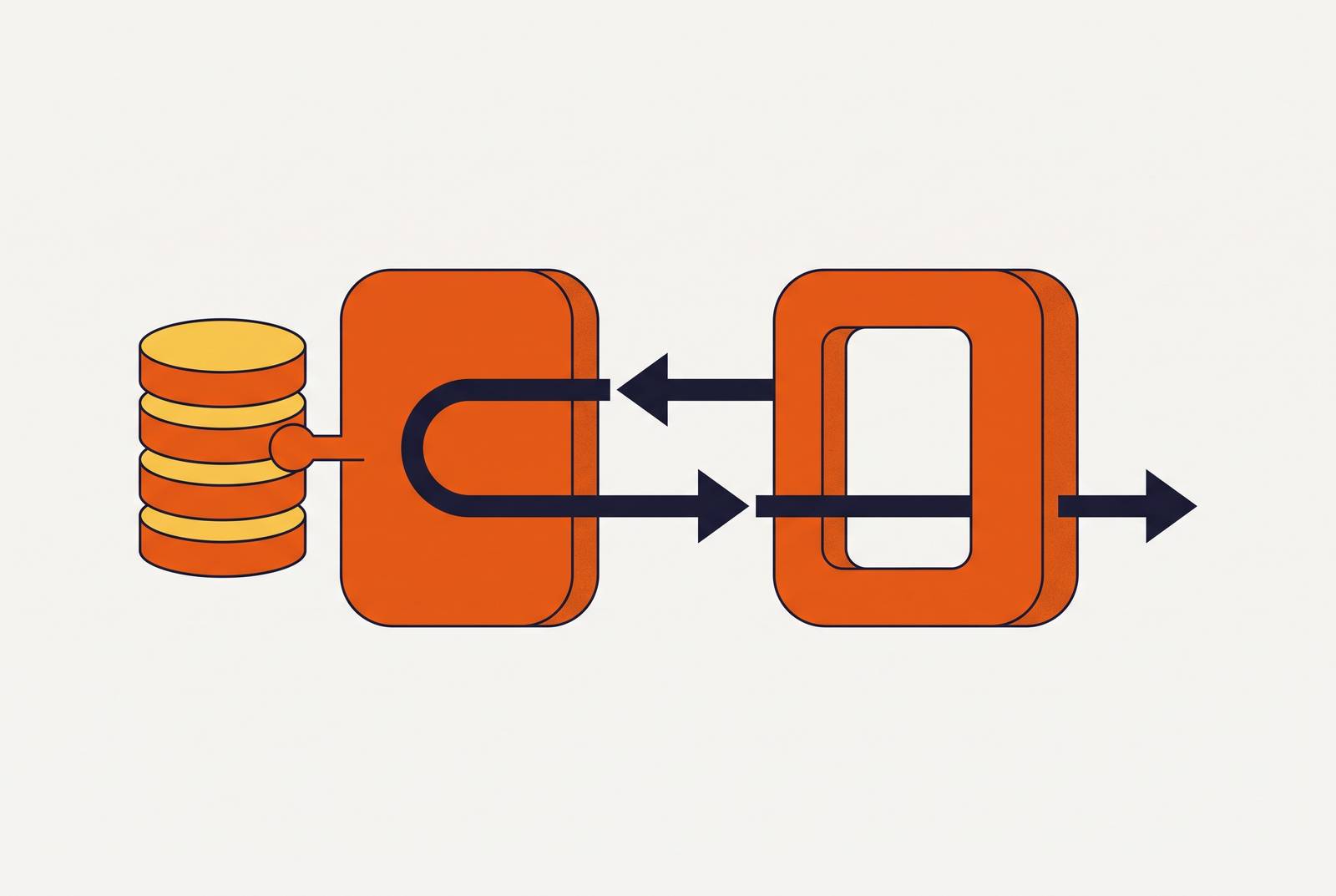
To test an application against stateful APIs without hitting production, use a stateful simulator that preserves the results of sequential calls and reflects them in later responses. Stateless mocks are the right tool for checking request shape and error handling on their own. The dividing line is whether a test’s correctness depends on what an earlier call left behind.
What integration tests are actually supposed to prove
Create a resource, read it, update it, and read it again. The final read must show the update to the resource created at the start. If the workflow then deletes that resource, subsequent reads must reflect its removal.
The operative word is cumulative. Each call leaves a footprint, and the next call depends on that footprint existing. A unit test can verify that a function produces the correct output for a given input without proving anything about that accumulated state. An integration test must go further by checking the relationship between operations. Its standard is therefore not just whether the response looks right, but whether the world changed correctly.
What a stateless mock actually does, and what it cannot do
A stateless mock is, in effect, a configuration file with an HTTP interface. It matches each incoming request to a fixed response without remembering earlier calls. That makes it useful for frontend work before a backend endpoint exists, assertions about URLs and headers, and checks that known errors are handled gracefully. Component isolation and independence from third-party services are genuine advantages. They keep unit-level checks fast and free of external dependencies.
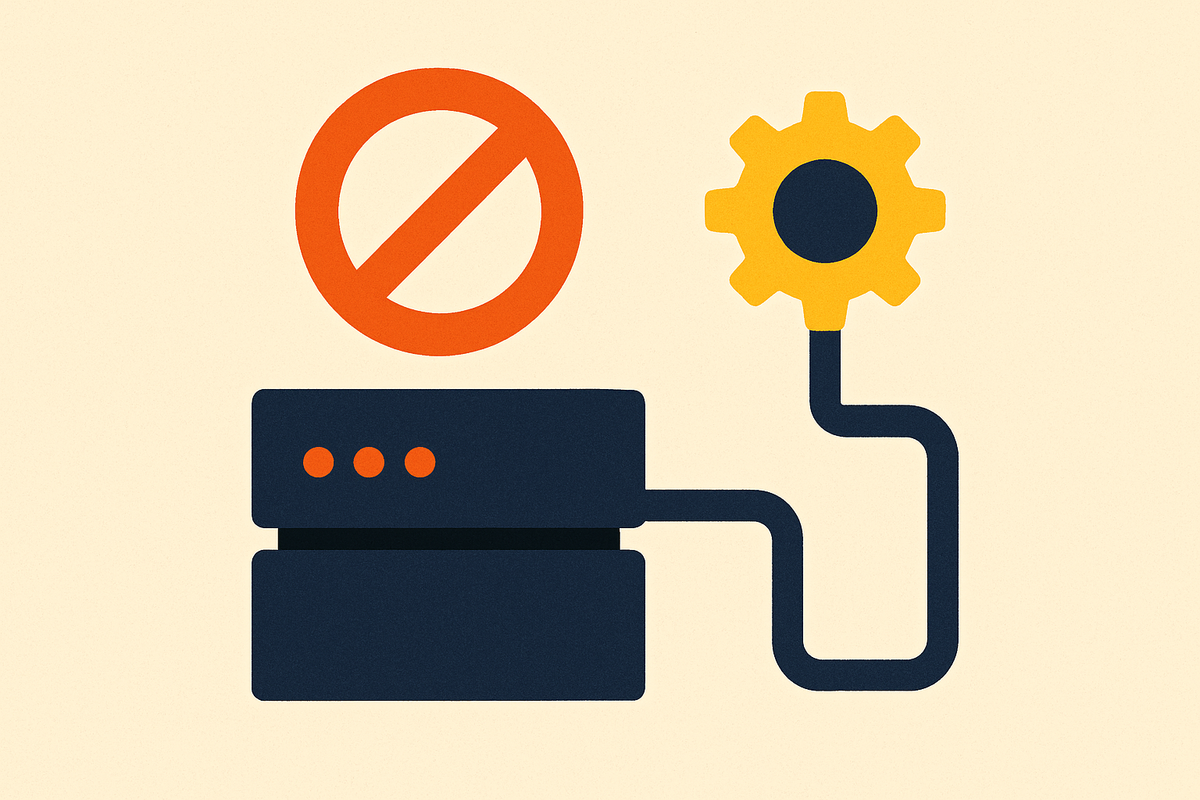
The same architecture creates a hard boundary. Without a storage layer, a mock can validate a POST and discard its contents, leaving the next GET unaware that anything happened. Stripe’s stripe-mock documents this behavior explicitly. Data sent in a POST is validated but otherwise ignored, rather than reflected in its response or future requests. This limit in a provider-maintained tool is a design choice, and the mistake is asking that design to prove lifecycle correctness.
The specific failure mode — false confidence from a passing mock-based test
Consider a pipeline that mocks POST /v1/payment_intents and asserts a 200 response. The test passes, but the application handler never stores the PaymentIntent ID. Nothing in the assertion connects successful creation to the application’s later use of that identifier. The fixture looks correct because its author made it look correct. Its consistency comes from an assumption about the payment lifecycle.
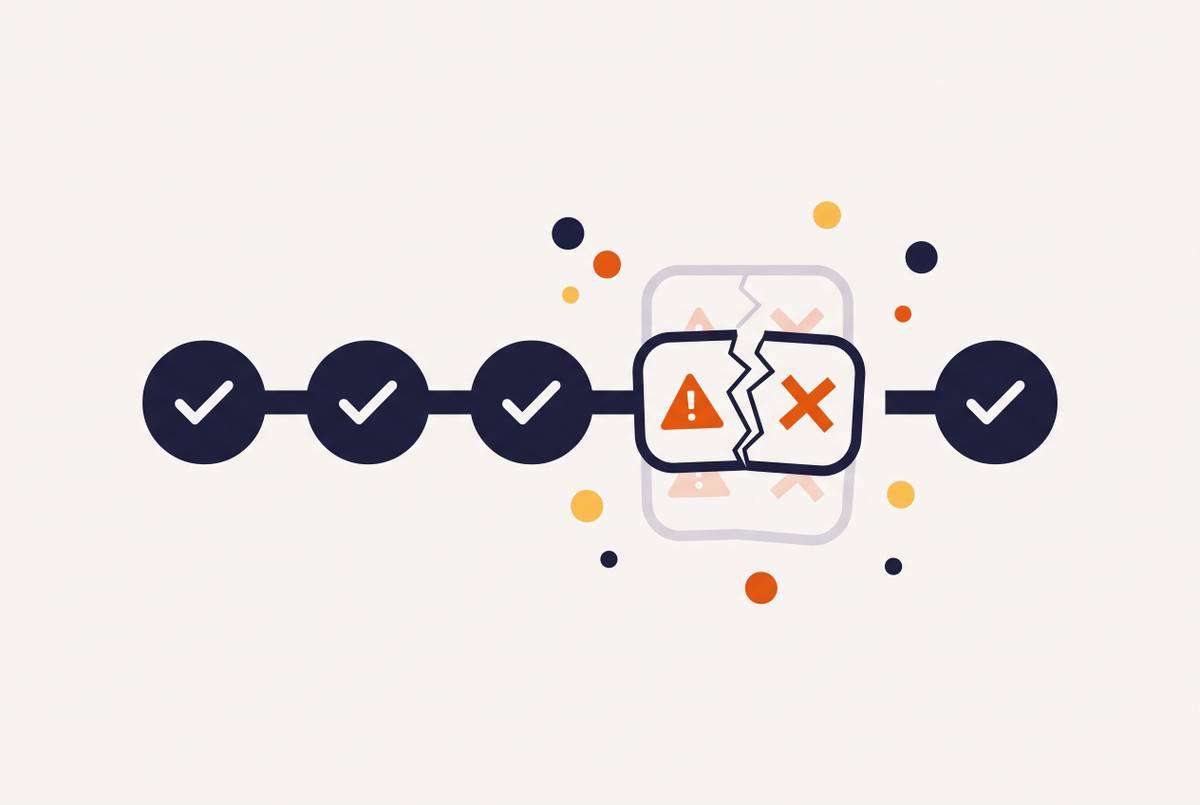
When the workflow reaches staging, the webhook handler reads undefined because no ID was persisted. The earlier green test offered no signal that the integration was broken. It verified the immediate response while leaving the relationship between payment creation and webhook handling untested. A stateful environment makes that relationship testable, although the test must still exercise the handler and assert the resulting state.
Hand-maintained fixtures can deepen this gap by keeping the test tied to an old response as the real API changes. Even an up-to-date fixture must remember a payment’s history to reproduce how events are delivered as that payment changes. Stripe documents that webhook event order is not guaranteed, duplicate deliveries can happen, and undelivered events retry for up to three days. A stateless mock can replay individual event payloads, but it cannot reproduce their cumulative effects against a persistent payment lifecycle.
What statefulness actually requires a simulator to do
A stateful simulator needs a persistent world that every operation reads or changes. POST must store a resource, GET must retrieve it, and list endpoints must include it. PATCH must update that same resource, and DELETE must remove it. The create, read, update, and read-again sequence checks that these operations work together.
Persistence alone is not enough when the API enforces a state machine. A pending payment that is captured must return captured on its next GET, and invalid transitions must be rejected. Transactional logic, asynchronous processing, and destructive operations likewise need an environment whose current state constrains what happens next.
That world also needs isolation and a useful starting point. One developer’s test must not alter another’s, which distinguishes a per-session locally hosted simulator from a shared provider sandbox. Pre-seeded realistic data gives tests valid resource IDs and relationships so they can start with more than empty fixtures. Ongoing checks against the live API then catch changes to response fields, error codes, and event behavior that would otherwise go unnoticed. Rystic’s simulators use persistent state and pre-seeded data, are checked against the real API before each release, and have published fidelity scores. Those scores provide evidence about the comparison rather than making statefulness itself a claim of perfect fidelity.
Where the line falls — which tests belong to mocks and which belong to stateful simulators
Use a stateless mock when the assertion is independent of earlier API activity. This includes testing a function in isolation, checking headers or parameters, and validating the handling of a known 404, 429, or 503 response. A third-party dependency without a public spec or state machine can also be stubbed for isolated checks. In each case, the test asks how the application handles a specified input or constructs a specified request. A persistent world adds little to that question.
Use a stateful simulator when the assertion depends on earlier API activity. This includes creating and then reading a resource, handling a webhook after a transition, and retrying with an idempotency key. Stripe documents a finite window after which idempotency keys can be removed, so normal retries and post-expiry reuse both need coverage. A flow that must reject capture of an already-captured payment also needs to know what happened before. Here, the test needs the API’s previous actions to constrain its next response.
Service virtualization occupies a useful middle ground for negative scenarios such as timeouts and malformed responses that do not themselves require full persistence. Mocks answer whether the application called the right endpoint correctly. Stateful simulators answer whether the integration handles what the API does next.
How this decision maps onto a CI/CD pipeline
Local development and pre-commit checks need fast feedback on isolated mistakes. Stateless mocks fit this layer because checks of the schema, headers, and how requests are built do not need live credentials or an external service. Developers should not have to start a simulator to prove unit-level behavior. Keeping these checks small preserves the isolation for which mocks were designed.
CI on merge is where the full create, read, update, and delete workflow belongs. A locally hosted stateful simulator lets that workflow run without upstream rate limits or live credentials. Separate state for parallel runs prevents one test’s changes from contaminating another’s results. For this layer, Rystic provides locally hosted simulators that can run in parallel containers without shared state and are verified against real API behavior before release.
Staging then validates behavior against real downstream dependencies and production-like data. It should not be the first place a missing PaymentIntent ID becomes visible. Automated schema diff jobs can catch another class of mismatch by comparing registered schemas with the upstream service’s current OpenAPI contract. That check applies to both stateless mocks and stateful simulators. It complements behavioral verification because a matching schema does not prove that an update changes a later read.
Fault injection as a first-class concern at the stateful layer
A known failure response and a failure during a workflow are different test conditions. A stateless mock can return a 429 or 503, which is enough to test an isolated error-handling branch. It must remember prior calls to produce a rate-limit failure because earlier successful requests used up the allowance. The missing ingredient is context. The same distinction separates a generic retry check from a retry involving an already-expired idempotency key.
Resilience tests must keep the world as it was before the fault to test its effects. A duplicate webhook concerns an event that has already been delivered, and a repeated capture concerns a payment that has already changed state. Service virtualization is useful for introducing difficult negative scenarios, but those scenarios need persistent context when their consequences depend on history. Within Rystic’s stateful workflows, configurable latency, 429s, and 503s allow retry logic and circuit breakers to be tested at controlled points. The failure is introduced into an ongoing sequence.
This distinction matters for an AI agent that calls Stripe three times during a workflow. A 429 in the middle tests a different situation from a 429 on the first isolated call. Earlier calls that succeeded have already changed what the agent must handle next. The simulator must retain those changes for the failure test to mean what it claims.
AI agents that call external APIs need stateful simulators for the same reasons traditional integrations do
An agent that calls POST /charges, conditionally calls GET /charges/{id}, and then calls POST /refunds based on the charge’s status is following a state-dependent workflow. A fixed response can give the agent a plausible next input without proving that the charge exists or has the reported status. This is the same integration gap as the payment and webhook example. Dynamic branching makes the gap harder to cover with static test data.
Multi-turn simulation lets later tool calls use the state left by earlier calls. Mocking the model works well for unit-level tests of routing and parsing logic. Testing that code on its own shows whether it handles the given model output correctly. It does not establish that the agent’s external actions leave a consistent world.
RL environments add requirements beyond persistence. The simulator must be deterministic, reset to a known state between episodes, and scale horizontally across thousands of containers. A live sandbox cannot provide those controlled execution properties in the same way. Deterministic state, controllable reset, and container-based scaling are explicit parts of Rystic’s RL environment design. As with CI, these runs must be repeatable and must not pick up state from unrelated runs.
Applying the decision rule — a practical starting point for teams currently using only mocks
Teams using only mocks do not need to replace their entire test infrastructure. The useful first step is to identify which tests claim to prove relationships between API calls. Webhook handlers, assertions about status after a state-changing request, and idempotency checks across retries are high-priority candidates. Request-shape, header-presence, and isolated error-handling assertions can remain where they are. The audit should move lifecycle checks while preserving effective unit testing.
For the tests that need persistent state, a locally hosted simulator removes dependence on live API credentials and upstream rate limits while allowing isolated parallel runs. Teams integrating Stripe, PayPal, Slack, GitHub, or similar services can consider Rystic’s pre-seeded simulators and published fidelity scores as a starting resource. Rystic’s Free and Pro plans need a network connection for billing, while Enterprise supports fully offline operation.
Create a resource, read it, mutate it, and read it again against the setup used by a test that claims to cover integration behavior. If the final read returns the pre-mutation value, that setup has exposed its limit. Run that diagnostic today to identify where a passing response is being mistaken for a working integration.