Local Slack API Simulator for Development and Testing
Developers can test Slack apps locally without credentials, tunnels, or production risk.
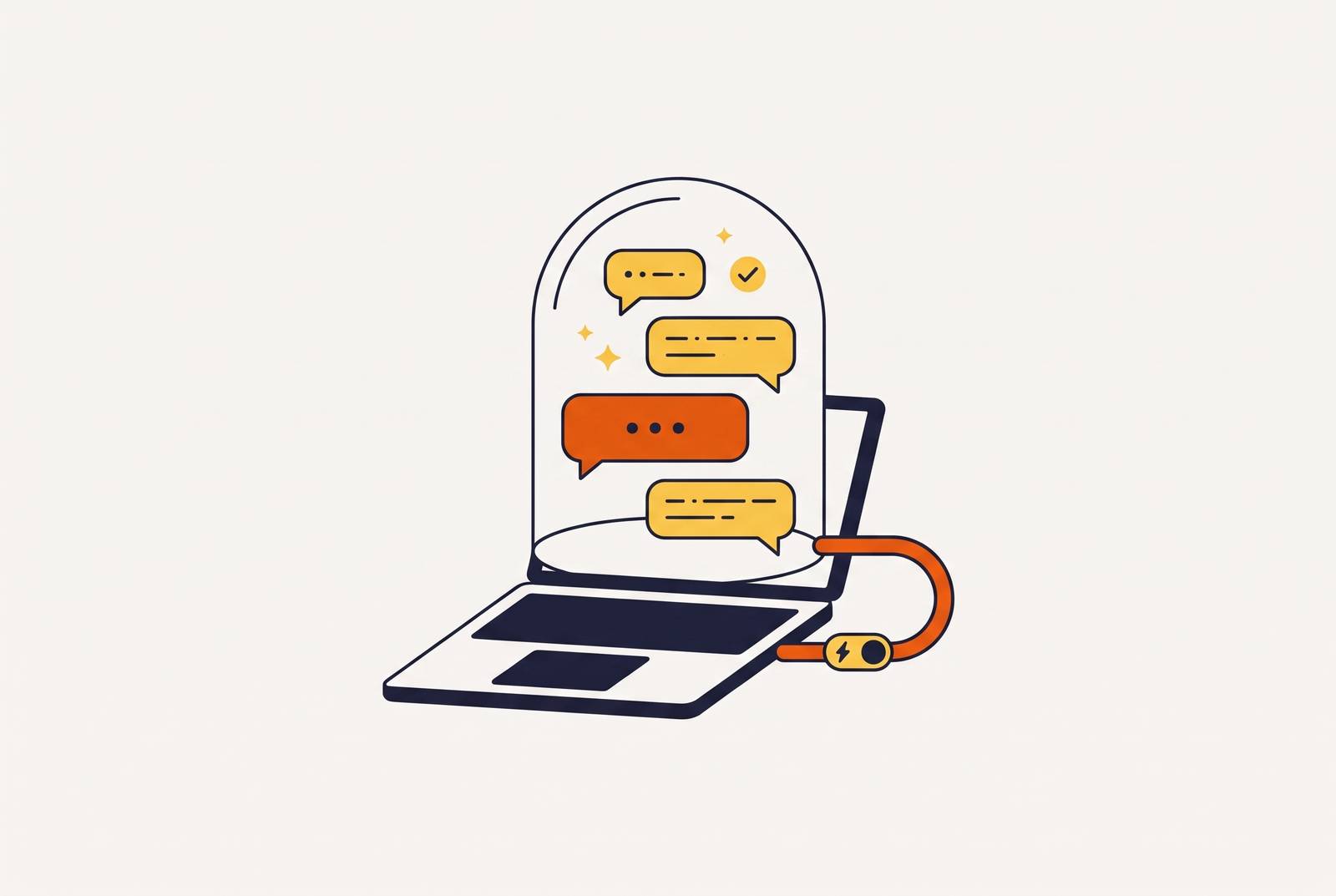
Integration testing against stateful APIs requires a local simulator that preserves the effects of earlier calls, so tests can exercise ordered workflows without hitting production. For Slack apps, that means testing against a self-contained workspace model. A stateful local Slack API simulator makes development, CI, and agent evaluation safer by keeping workspace changes observable, isolated, and resettable.
Why building Slack apps against a live workspace is structurally painful
A live-workspace development loop ties every iteration to a real API call and every bug investigation to a real workspace. Each developer needs a separate test bot, so setup grows with the team rather than remaining a shared, reproducible foundation. Even a small change depends on credentials, connectivity, and external state. The feedback loop is slow by construction. Its cost increases when several developers are changing bot behavior at once.
An invalid message can receive HTTP 200 while the response body contains {"ok": false, "error": "invalid_blocks"} and details in response_metadata.messages. Slack refuses the message. Transport success is therefore not application success. A development loop that overlooks the response body can leave the developer checking a real channel to discover that nothing was posted.
The Events API also depends on a live connection because Slack needs a URL it can reach over the internet for HTTP POST callbacks. Receiving events locally therefore requires exposing an endpoint to the internet, commonly through a tunnel. That adds infrastructure to an otherwise local development session. Pausing execution also has consequences beyond the debugger. Slack needs a response within 3 seconds, retries deliveries that were missed, and can eventually disable event subscriptions.
What developers cobble together when the official path fails
Teams consequently assemble their own substitutes. Duplicate test bots with tunnels give individual developers somewhere to work, but still require live connectivity and endpoint management. They do not provide a self-contained CI environment. The workspace remains an external dependency even when the application runs locally.
Patching HTTP internals removes that dependency at a different cost. A language-specific Slack SDK calls urllib.request.urlopen, which teams can mock directly, but this couples tests to implementation details that can change with SDK updates. Making real API calls instead preserves the external behavior while retaining network delays, valid-token requirements, and shared workspace state. None supplies the missing workspace model that remembers what the application did.
What a stateful local Slack simulator actually does differently
A stateless mock returns predefined responses without making later results depend on earlier operations. After a message is posted, the next message-list response may still be the same. The fixture describes an answer. That difference matters when an integration depends on order, because responses that each look right can still form a sequence that could never happen.
A stateful simulator maintains an internal model of channels, members, messages, threads, reactions, and DMs across calls within a session. Writes change what subsequent reads return. A test can post a message, obtain its timestamp, add a reaction, pin it, and archive the channel as one cumulative workflow. The assertions then test the consequences of operations rather than merely whether expected requests were issued. This is the central requirement for integration testing against APIs where order of operations changes the result.
Because the model runs locally without calling Slack, normal test runs need no live credentials, face no production rate limits, and cannot post to real channels by accident. Validation becomes part of that loop.
The Slack simulator options available today and what each one covers
ClydeDz/slack-simulator is a local Slack workspace and platform API simulator that runs in a browser without a live workspace or internet connection. Its documented surface includes bot messages, Block Kit, modals, slash commands, Socket Mode, HTTP endpoints, and webhooks. The browser interface lets developers switch between mock users to test approval flows, permission checks, and conversations with more than one participant. Seed resets make those scenarios reproducible. Its Logs tab exposes inbound and outbound Events, Interactivity, and Web API payloads in real time.
The Slack emulator in vercel-labs/emulate, available as @emulators/slack, takes a plugin-based approach within the broader emulate framework. It provides stateful emulation of the Slack Web API, OAuth v2 flow, and Incoming Webhooks. Its workspace model has channels, messages, threads, and reactions. A built-in Inspector dashboard displays workspace state, including message history and file uploads. The monorepo also includes emulators for GitHub, Stripe, Resend, and Twilio.
The distinction is primarily about workflow fit. ClydeDz’s simulator emphasizes interactive workspace testing and switching between participants, while the emulate package provides framework embedding through Next.js and Nuxt adapters and includes per-service tests and CI infrastructure. Evaluation depends on the required API surface, event transport, reset behavior, and visibility into state. The emulate documentation does not describe continuous verification against live Slack before every release or published fidelity tracking, so stateful coverage should not be mistaken for demonstrated behavioral parity.
How to wire a local Slack simulator into a development workflow
For a team moving from evaluation to implementation, the basic change is to point the application’s Slack client at the simulator’s localhost address. Bolt and other Slack SDKs accept a custom API host without changes to handler logic. The application retains its normal request path. What changes is the workspace receiving those requests, which allows development tests to exercise integration behavior.
For @emulators/slack, the documented workflow starts with installing the package and running npx emulate --service slack, or embedding it through a Next.js or Nuxt adapter. The Inspector at the configured port shows workspace state as calls execute. When events are delivered locally, there is no need for a public tunnel. It also removes the live service’s deadline and subscription-disabling behavior from that development session, allowing local execution to proceed without those external penalties.
Within that loop, Block Kit validation exposes invalid payloads before they reach a real channel. ClydeDz’s user dropdown supports testing approval and permission-gated flows without maintaining multiple bot tokens. Resets establish the next test’s starting conditions. Resetting to a seed state between runs is especially important for assertions about message counts, channel membership, or reactions, because those assertions depend on what existed before the first operation.
Running Slack integration tests in CI without live credentials
Live Slack integration tests require a real bot token and workspace ID in CI, with secret management and rotation when credentials expire. They also need safeguards to keep them from posting to real channels by accident. A message left by one run can change the next run’s channel-state assertions even when the application code is unchanged.
A fresh simulator for each CI job, or a reset to a known seed, removes that cross-run dependency. Parallel jobs and branches can exercise isolated workspace state. The tests still perform ordered API operations. Their starting conditions, however, are controlled by the test environment instead of inherited from earlier activity in a shared workspace.
The emulate monorepo includes a CI pipeline and per-service test suites, allowing the emulator to start within the pipeline without network access to Slack. A simulator with fault controls can also return endpoint-specific 429 responses or introduce latency during CI runs. This makes retry behavior testable before release. The integration suite can then provide the pipeline’s ordinary pass-or-fail signal through exit code 0 or 1, without live Slack access in the critical path.
Fault injection and resilience testing against the Slack API
Slack sets rate limits for each API method, for each workspace, and for each app, in windows measured per minute. A development workspace with little use may never hit the limits that a production bot hits when it posts often. Successful development calls therefore leave retry behavior largely untested. A local simulator makes those conditions controllable rather than dependent on generating enough live traffic to provoke them.
The relevant failures are specific and observable. Artificial latency tests spinner behavior and timeout handling, while 429 Too Many Requests responses exercise exponential backoff. A 503 Service Unavailable response tests circuit-breaker logic, and malformed or truncated responses test defensive parsing. Each changes a different part of the application’s behavior. Treating them as one generic error would miss the distinctions the integration must handle.
Fault injection belongs with the workspace model because a failure often happens partway through a sequence. A stateless mock can return a 429 on the third call, but a call counter alone does not represent the workspace changes made by the first two. State supplies that context. With controlled failures and local state that persists, a test can check retry behavior as the same workflow unfolds, instead of testing error handling through a separate set of response fixtures.
Why simulator fidelity to the real Slack API matters and how to measure it
Slack updates its API without always publishing breaking-change notices, so code based on an earlier snapshot can fall out of step. Passing tests then establish agreement with that snapshot. Statefulness is necessary, but it is not sufficient.
Handwritten mocks inherit the accuracy of their author’s understanding, while spec-derived mocks inherit the accuracy of the specification. Neither updates automatically when live behavior changes. Behavioral parity is the more useful measure. It checks whether the same inputs yield the same responses and workspace changes in the simulator and the real API, going beyond whether both seem to fit the same schema.
A continuous verification loop applies matching probes to both environments and compares their behavior as the simulator evolves. For stateful operations, those probes need to represent sequences, because a correct write response does not by itself establish that the next read is correct. Published fidelity scores make the comparison inspectable. Their usefulness depends on transparency about the tested surface, comparison method, and known gaps.
That distinction sets a limit on product claims. The emulate project’s documentation does not establish a continuous real-API verification mechanism, and its Events API payload-fidelity issue documents a known area of divergence. Documented functionality and demonstrated parity are separate evaluation criteria, particularly when a test depends on precise event payloads or validation behavior.
Using a Slack simulator as the environment for AI agents that call Slack tools
An agent can write natural-language output that makes sense while sending a malformed Slack API payload. A live workspace is a poor place to discover the difference. The same stateful environment used for integration development can expose the call’s actual effects without allowing it to change a real channel.
Prompt injection can induce unauthorized channel posts, extraction from workspace history, or record modification, creating compliance and liability risks. Evaluation needs containment as well as inspection. A controlled workspace lets tests check what those actions do to known state without exposing live workspace history or allowing changes in production.
RL training adds a reset requirement that live workspaces cannot satisfy. Training runs require thousands of isolated resets, while a live workspace accumulates side effects and cannot serve as a horizontally scalable, clean-start environment. A stateful local simulator supplies deterministic resets, controllable workspace state, and container-based scale without financial or live-workspace side effects. For Slack-tool agents, that makes the simulator an evaluation environment as well as a convenient source of API responses.