What Localhost Developers Should Evaluate After Outgrowing OpenAI Gym
Five criteria for choosing RL tooling when agents call real APIs.

Gymnasium, RLlib, and CleanRL provide contracts, distributed rollouts, and readable algorithms for reinforcement learning, but API-calling agents need an additional layer. Choosing tools for RL environments after outgrowing Gym requires evaluating stateful API fidelity, determinism, horizontal scalability, fault injection, and continuous verification. The best fit pairs RL infrastructure with an API simulator that meets those five criteria, so the training framework does not have to supply external-service behavior.
Why OpenAI Gym-style environments break down for agents that use external APIs
Gym and its maintained fork Gymnasium express interaction through a step() contract returning observation, reward, terminated, truncated, and info. That contract suits robotics, control, and games, where an environment advances and returns a reward. It does not define external-service behavior by itself. An agent calling Stripe, GitHub, or Slack encounters JSON, error codes, webhooks, and state that persists across sessions.
The gap appears when those calls become the agent’s actions. The training environment must keep the effects of those calls as they build up and let the service reset between episodes. A wrapper can turn calls into steps, but that alone does not give it fidelity or reproducibility. Teams therefore end up using live APIs, which are slow, expensive, and non-deterministic, or maintaining one-off wrappers whose state handling becomes another training dependency.
The five properties that actually matter when evaluating post-Gym tooling for API-calling agents
Stateful API fidelity asks whether the environment remembers call N when call N+1 arrives and applies the same connected behavior as the service it represents. Determinism and reproducibility ask whether the same initial state, seed, and actions produce the same responses when an episode is replayed. Horizontal scalability asks whether thousands of rollout workers can operate independently without competing over shared mutable state. Fault injection asks whether realistic failures are controlled parts of the environment. Drift and verification ask whether the simulated behavior is checked against the real API as it changes.
An environment can have the right endpoints yet lose a record between requests. It can also run workers in parallel while letting one worker change another worker’s reward. Each criterion therefore needs an observable test, and passing one cannot compensate for failing another. Together, they distinguish an environment that accepts tool calls from one that can support trustworthy training.
Stateful API fidelity: why a mock that forgets is useless for training agents
A stateless mock can return a valid response without showing what the agent did. Consider a POST that creates a record, followed by a GET that lists records. If the GET always returns the same fixture, the new record never appears. The action has no observable consequence in that world. The later read cannot tell the agent whether creation succeeded, even though each response may look right on its own.
This breaks more than create-then-read workflows. Conflicts and pagination also depend on a consistent account of the records and actions that came before. For RL, rewards may depend on whether an order was created, a webhook fired, or a downstream record changed. Those outcomes require cumulative state. Otherwise, the reward function evaluates assumptions in the fixtures.
A created record should appear when listed and disappear after deletion. State isolation is part of that requirement, because a coherent world becomes incoherent if another rollout worker can modify it. Fidelity starts with memory, but that memory must belong to the episode being evaluated.
Determinism and reproducibility: what it means to replay an episode against an API environment
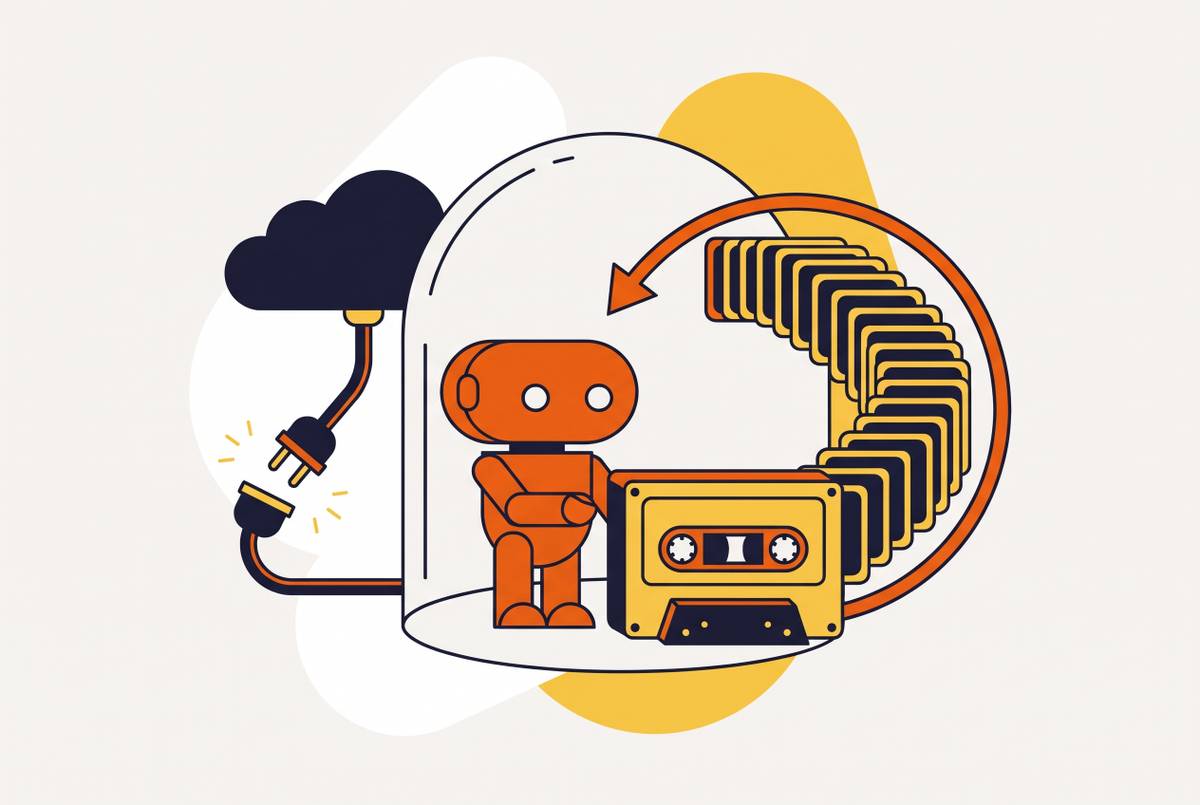
A stateful environment still produces an unreliable training signal if uncontrolled variation changes the outcome between runs. Live API calls introduce latency differences, transient failures, and rate-limit responses that may not recur. Shared test data can also change the outcome when workers read and write the same record. Retries do not repair that underlying race. Per-episode isolation is needed so that one trajectory does not change the conditions of another.
Controlled variation is different from uncontrolled variation. Fault schedules, latency distributions, and synthetic data can give an agent different conditions to work with and still be seedable. That distinction makes reproducibility useful for RL. When a failed episode can be replayed, the developer can separate a change in agent behavior from a change in its environment.
Replay must reproduce the responses and faults. A seed alone is insufficient if external state or network behavior remains uncontrolled. The initial state must also be restored, and the same actions must meet the same conditions. Without that control, environment variance may account for what looks like an improvement.
Horizontal scalability: running thousands of rollout workers against an API environment without shared-state collapse
Local experimentation can conceal a shared-state bottleneck because one agent has no competing writers. The bottleneck occurs when more workers start creating, listing, and deleting records in the same simulated service. One worker’s reset can then affect another worker’s unfinished episode. If they must serialize access to a single world, the API environment becomes the limit on training throughput.
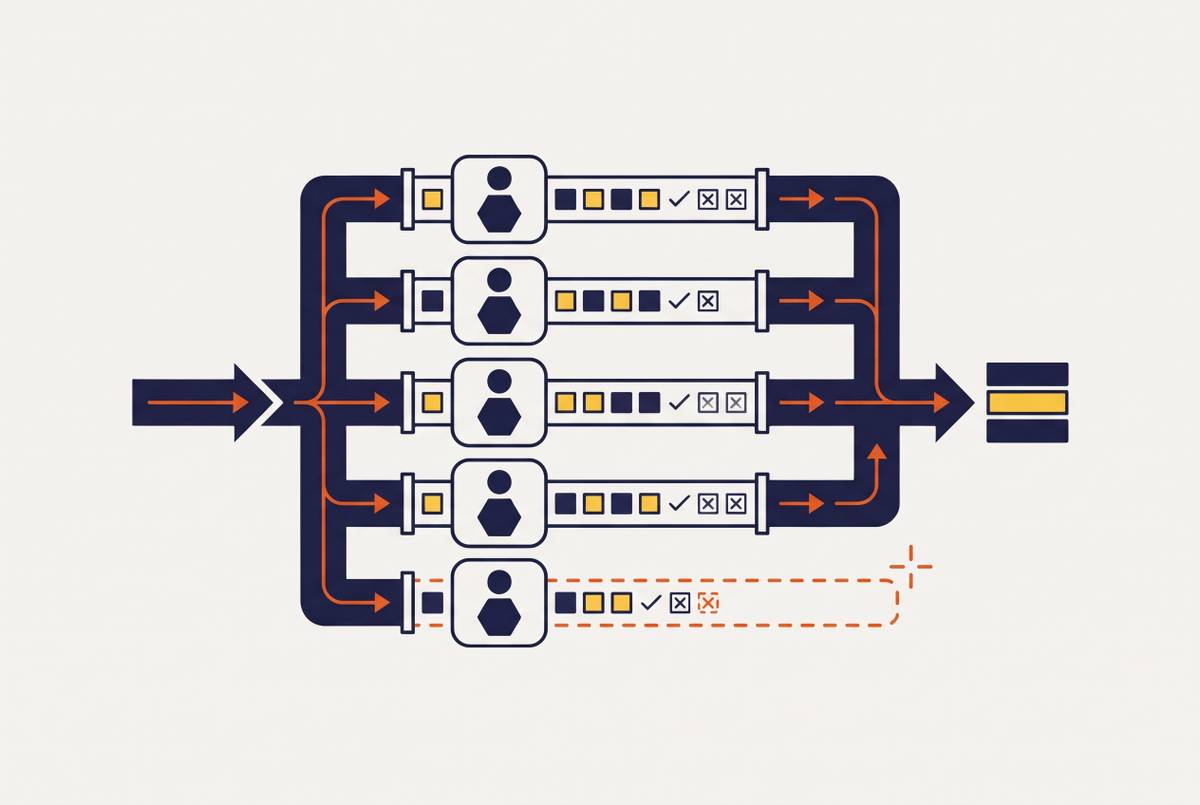
RLlib distributes rollout workers across Ray clusters, while the developer supplies a Gymnasium-compatible environment. That arrangement depends on environments being independently instantiated with isolated mutable state. For an API simulator, independence includes records, auth tokens, and transaction history. Resetting one episode must leave every other worker’s world untouched.
This makes deployment shape part of the evaluation. A container that each worker addresses independently can scope state to an episode. “Stateless” at the infrastructure level means that workers remember API actions within the episode and do not depend on shared mutable global state. The distinction separates a useful local testing service from an environment that can support parallel RL training.
Fault injection: treating API failures as a first-class training signal, not an edge case
MCP-Injector found that larger model scale did not provide protection against tool-call faults. An environment that always responds correctly omits conditions the deployed agent must handle, including rate limits, dropped connections, and partial responses. Fault injection makes those conditions available as controlled training signals.
The failures must cover different recovery demands. An endpoint that remains down throughout an episode tests a different situation from one that fails once and recovers. Intermittent failures need seedable schedules, while rate-limit responses with Retry-After headers test backoff behavior. Injected latency tests timeout handling without depending on live network variation.
Configured faults, however, are not evidence of exercised faults. AgentChaos found that AutoGen’s short call chains could finish before the configured injection position, leaving intended failures untriggered. The practical response is to verify that faults occur where expected. An evaluation must inspect the actual trajectory, or a seemingly resilient agent may never have encountered the failure being tested.
Drift and verification: why an unverified simulator gives false confidence as the real API evolves
Reproducibility can preserve an inaccurate world just as reliably as an accurate one. A simulator that matched an API when it was built may teach old behavior after the service changes. Schema drift can change field names, required parameters, or error codes. Behavioral drift is less visible from response shapes. A changed rate-limit policy or pagination default can invalidate the simulator’s logic while its responses still appear well formed.
Prism’s proxy mode routes traffic to the upstream server and flags divergence against an OpenAPI specification. That provides a useful check for schema-level differences. It does not establish that a stateful simulator reproduces the service’s business logic across an episode. Verification must therefore address behavior as well as shape, especially where rewards depend on connected actions.
This criterion is difficult to judge from outside a provider’s implementation. Published fidelity scores, verification logs, and a public methodology give developers something more concrete than assurances of realism. Evaluation must establish whether comparison against the live API happens before every release and whether its results are inspectable. Transparency makes the remaining gap visible instead of concealing it behind a claim of compatibility.
Which tools for RL environments fit these five criteria?
Gymnasium provides the step(), reset(), render(), and close() contract, while RLlib supplies distributed rollout infrastructure. CleanRL emphasizes readable, single-file algorithm implementations. These are different responsibilities within the classic stack. Seedable environments and Ray-based parallelism support reproducibility and scale, but they do not supply persistent third-party service behavior, an API-level fault model, or verification against live APIs. The stack remains well suited to robotics and games, and can support API agents when the missing service layer is supplied.
TextArena serves a different need with competitive text-based games. Researchers at A*STAR and IBM Research built it to evaluate LLM-agent skills including theory of mind, deception, persuasion, and planning across single-player, two-player, and multi-player formats. It is strong in determinism and in the rich ways agents interact with each other. Its world model is game logic, however, so those strengths do not establish stateful service fidelity or API fault coverage.
NVIDIA NeMo Gym with ProRL offers broad environments spanning coding, math, knowledge, agentic tool-use, and safety. Its Rollout-as-a-Service architecture separates rollout execution from the training backend, supporting scale without binding both functions together. Simulator quality remains a separate evaluation. Each tool-use environment still needs to be checked for stateful behavior and drift verification. Prime Intellect Environments Hub likewise offers breadth, rather than making deep simulation and fault injection for specific external services its design center.
None of these tools, as described here, supplies the complete layer of stateful, continuously verified, fault-injectable simulators for services such as Stripe, GitHub, Slack, Kalshi, and PayPal. What backs the tools the agent calls remains to be evaluated.
What stateful, verified API simulators add to the stack above RL environment infrastructure
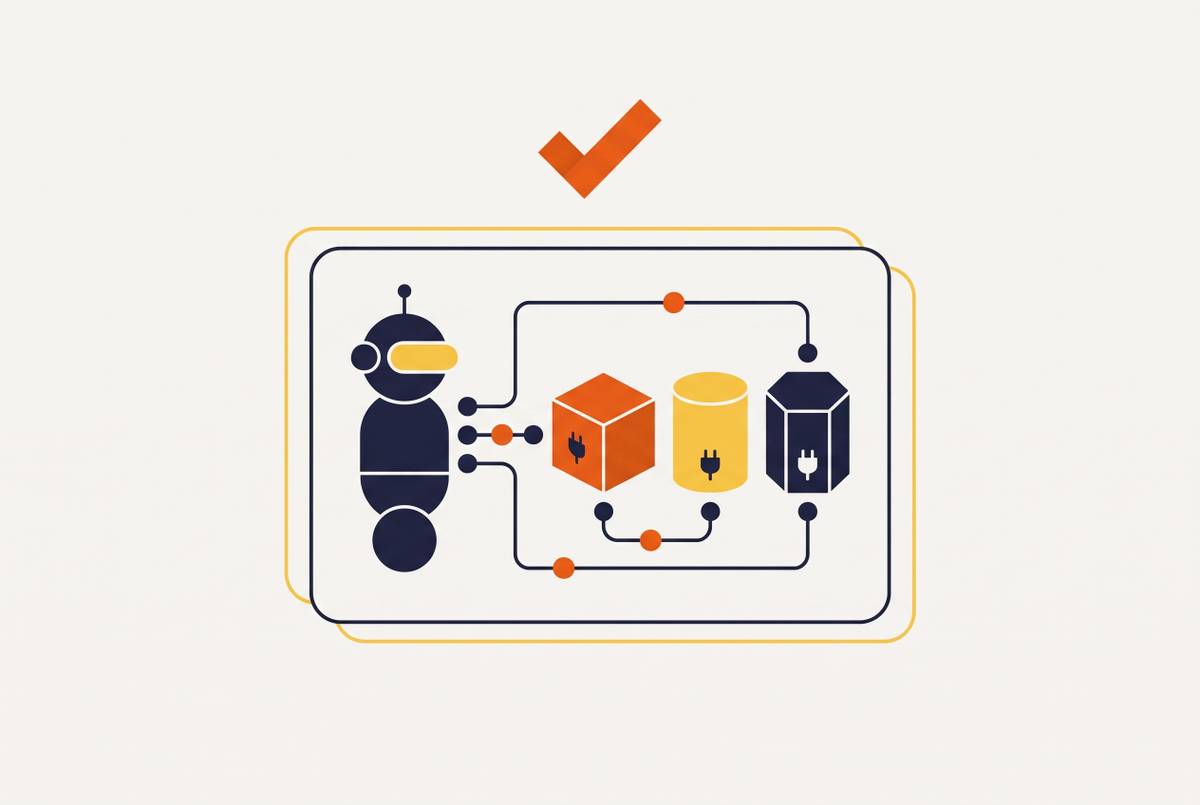
A simulator supplies the API layer that an RL environment wraps. The training infrastructure still handles rollout and learning, while the simulator supplies the service behavior the agent meets in each episode. The two layers are complementary. A well-built simulator preserves records across calls and starts from realistic pre-seeded data, so the agent operates in a plausible world.
That world also needs a controlled lifecycle. Local execution removes live network calls, clean resets restore episode state, and seedable fault schedules make failures reproducible. Each rollout worker gets its own world in a separate container instance, with no shared mutable global store. Configurable latency, 429s, 503s, and connection resets then supply the failure conditions that happy-path mocks omit.
Comparing the simulator against the real API before every release, with published fidelity scores, exposes where the representation falls short. This layer applies to payment tools such as Stripe and PayPal, developer workflows through GitHub, communication through Slack, event platforms such as Kalshi, and transactional messaging through Resend and Lob. With this layer, training and CI need no live credentials and do not depend on live rate limits, while simulated rate limits remain part of the tests by design.
A practical evaluation checklist for teams ready to move beyond Gym-style tooling
For teams evaluating a candidate, the five criteria become concrete acceptance tests. Start with a create-list-delete sequence and check that the record appears before deletion and disappears afterward. Then record a full action-response trajectory containing at least one fault, reset the environment with the same seed and initial state, and repeat the actions. Compare the trajectories. This tests both cumulative behavior and replayability.
Next, instantiate two workers with separate state and have worker A create a record. Worker B should not see it. Configure a rate-limit fault at a specific call position, run the episode, and verify that it actually fires there. A configuration option is not proof of coverage, particularly when execution may end before the injection point.
Finally, ask how often the simulator is verified against the live API and where the results or fidelity score can be inspected. Updates made only when someone notices a discrepancy do not provide a dependable basis for behavioral accuracy. Each answer should be falsifiable through a trajectory, an isolation test, or verification evidence. That evidence turns a tool comparison into a defensible choice of training infrastructure.